
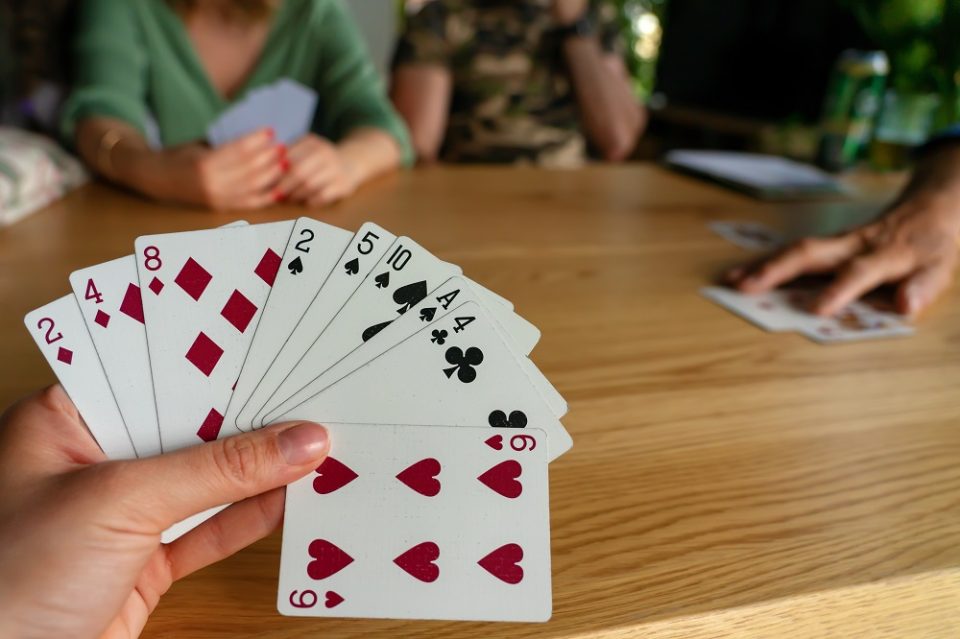
Card games have been part of human culture for centuries, cutting across generations, regions, and lifestyles. From casual family gatherings to competitive tournaments, a card game offers a unique mix of entertainment, mental challenge, and social connection. Simple to learn yet often difficult to master, card games continue to thrive even in a digital-first world.
What Is a Card Game?
A card game is any game that uses a deck of cards as its primary playing component. Most traditional card games rely on a standard deck of 52 cards, while others use customized decks designed for specific rules or themes.
Card games can be played by:
-
Two players, focusing on head-to-head strategy
-
Small groups, emphasizing teamwork or rivalry
-
Large gatherings, where luck and interaction play a bigger role
Their flexibility makes card games suitable for almost any setting.
A Brief History of Card Games
Card games are believed to have originated in Asia and later spread to the Middle East and Europe through trade routes. Over time, regional variations emerged, shaping the rules, symbols, and styles we recognize today.
Key historical highlights include:
-
Early hand-painted cards used by nobility
-
The introduction of mass-printed decks, making cards widely accessible
-
The evolution of modern rulesets that balance chance and skill
Despite changes in format, the core appeal of card games has remained constant.
Popular Types of Card Games
Card games come in many forms, each offering a different kind of experience.
Trick-Taking Games
These games revolve around winning rounds, or “tricks,” by playing the strongest card.
-
Focus on memory and timing
-
Often played in partnerships
Matching and Shedding Games
The goal is usually to get rid of all your cards before opponents.
-
Fast-paced and easy to learn
-
Ideal for families and casual players
Gambling and Betting Games
These games involve wagering and probability-based decisions.
-
Require risk assessment
-
Common in competitive or casino environments
Strategy-Based Card Games
Here, long-term planning matters more than luck.
-
Emphasize decision-making
-
Often attract serious and competitive players
Skills Developed Through Card Games
Playing card games regularly can sharpen both mental and social skills.
Key benefits include:
-
Improved memory and concentration
-
Better strategic and logical thinking
-
Enhanced patience and emotional control
-
Stronger communication and teamwork abilities
For many players, these benefits are just as rewarding as winning.
Why Card Games Remain Popular Today
Even with endless entertainment options available, card games hold their ground because they are:
-
Portable and inexpensive
-
Inclusive, suitable for all age groups
-
Adaptable, with endless variations and house rules
Digital versions have also expanded their reach, allowing people to play anytime, anywhere, without losing the essence of the experience.
Card Games in the Digital Era
Modern technology has transformed how card games are played and shared.
-
Online platforms enable global matchmaking
-
Mobile apps make solo or multiplayer play convenient
-
Tutorials and practice modes help beginners improve faster
Despite this shift, many players still prefer physical cards for their tactile feel and face-to-face interaction.
How to Get Started with Card Games
Starting is easier than most people think.
-
Choose a game suited to your group size
-
Learn the basic rules before diving into advanced strategies
-
Play a few practice rounds to build confidence
The key is consistency—skills improve naturally with regular play.
Frequently Asked Questions (FAQs)
1. Are card games mostly based on luck or skill?
Most card games involve a balance of both. Luck influences the cards you receive, while skill determines how effectively you play them.
2. Can card games help improve mental health?
Yes, they can reduce stress, improve focus, and provide social interaction, which contributes positively to mental well-being.
3. What age group are card games suitable for?
Card games can be adapted for children, adults, and seniors, making them universally accessible.
4. Do I need special equipment to play card games?
In most cases, only a deck of cards is required. Some games may use score sheets or tokens, but these are optional.
5. Are digital card games as effective as physical ones?
Digital card games are convenient and educational, but physical card games often offer better social engagement.
6. How long does it take to learn a new card game?
Simple card games can be learned in minutes, while more complex ones may take several sessions to fully understand.
7. Can card games be played competitively?
Absolutely. Many card games have organized competitions, leagues, and tournaments at both local and global levels.
